
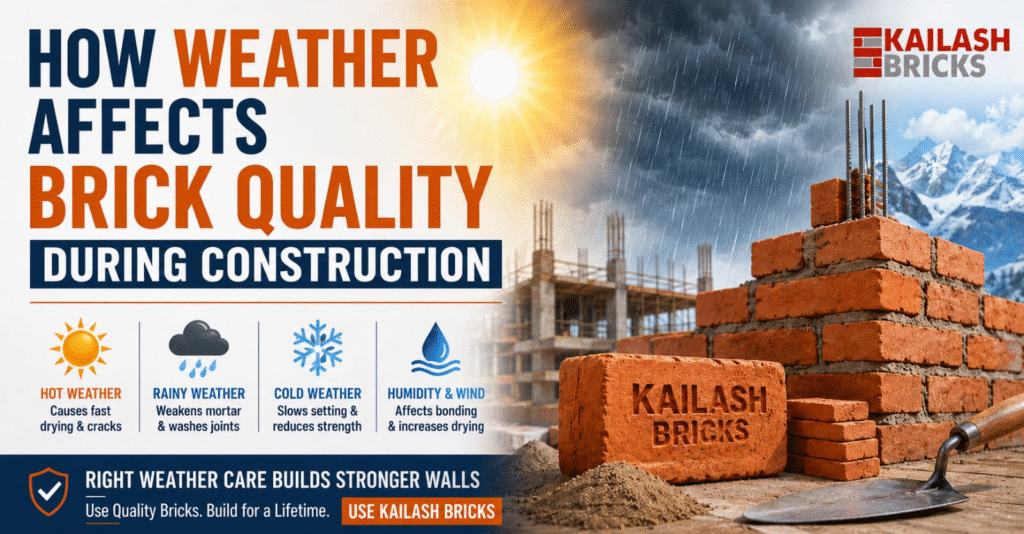
Weather plays a very important role in construction, especially when working with bricks. Many people focus mainly on materials like cement, sand, and bricks, but weather conditions such as temperature, rainfall, humidity, and wind can greatly affect the quality and strength of brickwork.
If brick construction is done without considering the weather, it can lead to weak walls, cracks, poor bonding, and long-term structural issues.
That is why builders and engineers always keep an eye on weather conditions before and during construction work. Using high-quality materials such as Kailash Bricks also helps maintain strong and durable construction even in challenging weather conditions.
In this article, we will understand how different weather conditions affect brick quality and what precautions builders should take during construction.
Why Weather Matters in Brick Construction :
Brick construction involves materials such as bricks, cement mortar, and water. These materials interact with each other through a chemical process known as hydration.
This process allows cement mortar to gain strength and bind bricks together.
Weather conditions directly influence this process. For example:
- Very high temperatures can dry mortar too quickly
- Heavy rain can wash away cement from joints
- Cold temperatures can slow down the setting process
Because of these factors, weather conditions directly affect the strength, durability, and stability of brick walls. Using strong and reliable materials like Kailash Bricks helps reduce some risks, but weather precautions are still necessary.
Effect of Hot Weather on Brick Construction :
Hot weather is one of the biggest challenges during brick construction. When temperatures rise significantly, several issues can occur.
1. Fast Drying of Mortar
In very hot conditions, water in the cement mortar evaporates quickly. This prevents proper hydration of cement, which means the mortar does not gain its full strength.
As a result, the bond between bricks becomes weaker.
2. Cracks in Brick Walls
Rapid drying can cause shrinkage in the mortar joints. Over time, this shrinkage may lead to cracks in the brick walls. These cracks can weaken the structure and reduce its durability.
3. Reduced Bond Strength
When the mortar dries too fast, it cannot properly adhere to the bricks. This weak bonding can affect the stability of the entire wall. High-quality bricks, such as Kailash Bricks, can improve bond strength, but proper construction practices are still necessary.
Prevention in Hot Weather
Builders usually take the following precautions during hot weather:
- Wet the bricks before laying them
- Work during early morning or evening hours
- Cover fresh brickwork with a wet cloth or plastic sheets
- Keep the walls moist for proper curing
These steps help maintain the strength and durability of brick construction.
Effect of Rainy Weather on Brick Construction
Rain can also create serious problems during brick construction. Although water is required for cement hydration, excessive rainwater can disrupt the construction process.
1. Weak Mortar Mix
Heavy rain can dilute the cement mortar mixture. When this happens, the mortar loses its strength and bonding capacity, leading to weak brick joints.
2. Mortar Washing Away
If rain falls immediately after brick laying, it may wash away the cement paste from the mortar joints. This reduces the durability and strength of the wall.
3. Uneven Brick Alignment
Rain creates slippery conditions, which makes it difficult for workers to place bricks accurately. This may lead to uneven brick alignment and poor wall structure. Even when using quality materials such as Kailash Bricks, protection from rain is necessary for proper construction.
Prevention in Rainy Weather
Builders usually follow these safety measures:
- Avoid construction during heavy rainfall
- Cover the brickwork with plastic sheets or tarpaulin
- Store bricks and cement in dry areas
- Protect fresh mortar joints from rainwater
These precautions help maintain the quality of brick construction.
Effect of Cold Weather on Brick Construction
Cold weather also affects brick construction, especially in regions where temperatures drop significantly.
Low temperatures slow down the chemical reactions in cement mortar, which can delay the construction process.
1. Slow Setting of Mortar
In cold conditions, mortar takes longer to set and gain strength. This slows down construction progress.
2. Freezing of Water in Mortar
If temperatures drop below the freezing point, water inside the mortar may freeze. Frozen water expands and can damage the bond between bricks, leading to cracks and weak joints.
3. Reduced Work Efficiency
Cold weather also makes it difficult for construction workers to maintain normal work speed and efficiency. Strong bricks like Kailash Bricks help maintain structural strength, but additional precautions are still required in cold climates.
Prevention in Cold Weather
Builders use several methods to handle cold weather conditions:
- Use warm water for mixing mortar
- Cover brickwork with insulating materials
- Avoid construction during freezing temperatures
- Use winter construction techniques
These methods help maintain proper bonding between bricks.
Effect of Humidity on Brick Quality
Humidity refers to the amount of moisture present in the air. Both high humidity and low humidity can affect brick construction.
High Humidity
High humidity slows down the drying process of mortar. While this may reduce cracking, it can also delay construction progress.
Low Humidity
Low humidity increases evaporation from mortar, which can weaken bonding between bricks.
To reduce these effects, builders often use proper curing techniques and quality materials like Kailash Bricks.
Effect of Wind on Brick Construction
Wind is another environmental factor that can influence brick quality. Strong winds increase the evaporation rate of water from mortar. This can cause:
- Faster drying of mortar
- Weak bonding between bricks
- Surface cracks in mortar joints
To prevent this issue, workers may install temporary wind barriers or cover fresh brickwork during construction.
Importance of Proper Curing
Regardless of weather conditions, curing is essential for strong brick construction. Curing means keeping brick walls moist for several days so that the cement mortar gains full strength.
- Proper curing provides several benefits:
- Improves bonding between bricks
- Prevents cracks in walls
- Increases the durability of the structure
- Extends the life of the building
Usually, brick walls should be cured for 7 to 10 days after construction. When high-quality bricks such as Kailash Brick are used along with proper curing, the result is stronger and longer-lasting brickwork.
Best Weather Conditions for Brick Construction
The ideal weather conditions for brick construction include:
- Moderate temperature
- Low to medium humidity
- Little or no rainfall
- Mild wind conditions
These conditions allow mortar to set properly and create strong brick bonds.
Weather conditions have a significant impact on brick construction quality. Factors such as heat, rain, cold, humidity, and wind can affect mortar strength, brick bonding, and the overall durability of a structure.
By understanding how weather affects construction and taking proper precautions, builders can ensure strong, long-lasting brick walls. Using reliable and durable bricks, such as Kailash Bricks, also helps improve construction quality. In simple terms, successful brick construction depends not only on good materials and skilled labour but also on working with the right weather conditions and proper planning.