
Nikki Boora

Bricks calculation Guide by Kailash Bricks

Brick Calculation Guide: How Many Bricks Do You Need for a House?

When building a house, one of the most common questions people ask is: “How many bricks will I need? Brick calculation is an important step in construction because it helps estimate the total materials required for building walls. Proper brick calculation not only saves money but also ensures that construction work runs smoothly without delays. If you buy fewer bricks than required, the construction work may stop in the middle. On the other hand, buying too many bricks can increase the overall cost unnecessarily. That is why builders and engineers always calculate the number of bricks before starting construction. Using high-quality materials such as Kailash Bricks also ensures better strength and durability for your building. In this guide, we will learn a simple method to calculate the number of bricks needed for a house. Why Brick Calculation Is Important Before starting any construction project, calculating the number of bricks is essential. It helps builders and homeowners plan materials efficiently. Here are some key benefits of brick calculation: When builders use reliable materials like Kailash Bricks, proper brick estimation becomes even more important because it ensures the right quantity of quality bricks is purchased. Standard Brick Size To calculate bricks correctly, you must first know the size of a standard brick. In many countries, the standard brick size is: 190 mm × 90 mm × 90 mm However, when mortar (cement mixture between bricks) is added, the effective brick size becomes: 200 mm × 100 mm × 100 mm This size is usually used in brick calculations because mortar joints increase the overall dimensions slightly. High-quality bricks like Kailash Bricks are manufactured with proper dimensions, which helps maintain uniformity during construction. Basic Formula for Brick Calculation The most common formula used for brick calculation is: Number of Bricks = Volume of Wall ÷ Volume of One Brick Engineers and builders widely use this formula because it gives a reliable estimate of the required bricks. Let’s understand the process step by step. Step 1: Calculate Wall Volume First, calculate the volume of the wall using this formula: Wall Volume = Length × Height × Thickness Example: Wall length = 10 meters Wall height = 3 meters Wall thickness = 0.2 meters So, Wall Volume = 10 × 3 × 0.2 Wall Volume = 6 cubic meters This means the total volume of the wall is 6 cubic meters. Step 2: Calculate Volume of One Brick Now, calculate the volume of a single brick, including mortar. Brick size with mortar: 0.2 m × 0.1 m × 0.1 m Brick Volume = 0.002 cubic meters Standardised bricks, such as Kailash Bricks, have consistent dimensions, which makes calculations more precise and construction more efficient. Step 3: Calculate the Number of Bricks Now divide the wall volume by the volume of one brick. Number of Bricks = Wall Volume ÷ Brick Volume Number of Bricks = 6 ÷ 0.002 Number of Bricks = 3000 bricks So, approximately 3000 bricks are needed to build this wall. Add Extra Bricks for Wastage During construction, some bricks may break or get damaged. Because of this, builders usually add 5–10% extra bricks to the total estimate. Example: Required bricks = 3000 10% extra = 300 bricks Total bricks needed = 3300 bricks Using strong bricks such as Kailash Bricks can reduce breakage and ensure better durability for the structure. Bricks Required per Square Meter Sometimes builders use a simpler estimation method instead of volume calculations. For example: A 9-inch wall requires about 100–110 bricks per square meter A 4.5-inch wall requires about 50–55 bricks per square meter Example: If the total wall area is 50 square meters, then: Bricks required = 50 × 100 Total bricks = 5000 bricks This method is faster and commonly used at construction sites. Factors That Affect Brick Requirement The number of bricks needed for a house may change depending on several factors. 1. Wall Thickness Thicker walls require more bricks. For example: 9-inch walls require more bricks, 4.5-inch walls require fewer bricks 2. Doors and Windows Doors and windows reduce the number of bricks required because those spaces are empty. For example, if a wall has large windows or multiple doors, the total brick requirement will decrease. 3. Mortar Thickness Mortar joints usually have a thickness of about 10 mm. If the thickness of the mortar joint changes, the total number of bricks required may also change slightly. 4. Brick Quality and Size Brick size and quality also affect construction. Uniform and strong bricks like Kailash Bricks help create better bonding and stronger walls. Example: Bricks Needed for a Small House Let’s take a simple example of a small house. Assume: Total wall area = 100 square meters For a 9-inch wall: Bricks required per square meter ≈ : 100 bricks Total bricks required: 100 × 100 = 10,000 bricks Add 10% extra for wastage: 10,000 + 1,000 = 11,000 bricks So, approximately 11,000 bricks are required to build the walls of a small house using quality materials such as Kailash Bricks. Tips to Estimate Bricks Correctly Here are some helpful tips for accurate brick estimation: ✔️ Measure wall dimensions carefully ✔️ Always add extra bricks for breakage ✔️ Subtract the area of doors and windows ✔️ Use standard brick sizes for calculations ✔️ Choose reliable bricks like Kailash Bricks for better durability These steps help builders calculate materials more accurately and avoid unnecessary costs. Modern Tools for Brick Calculation Today, many online calculators and construction apps help estimate the number of bricks required quickly. You simply need to enter: The calculator automatically provides the number of bricks needed. This makes the process faster and reduces the chances of calculation errors. Brick calculation is an essential step in any construction project. Knowing the number of bricks required helps builders manage materials efficiently, control construction costs, and complete projects without delays. The process is simple: By following these steps and using reliable materials such as Kailash Bricks, you can ensure strong, durable, and well-planned construction. Proper

Brick Calculation Guide: How Many Bricks Do You Need for a House? Read More »
Best Weather Conditions for Brick Construction

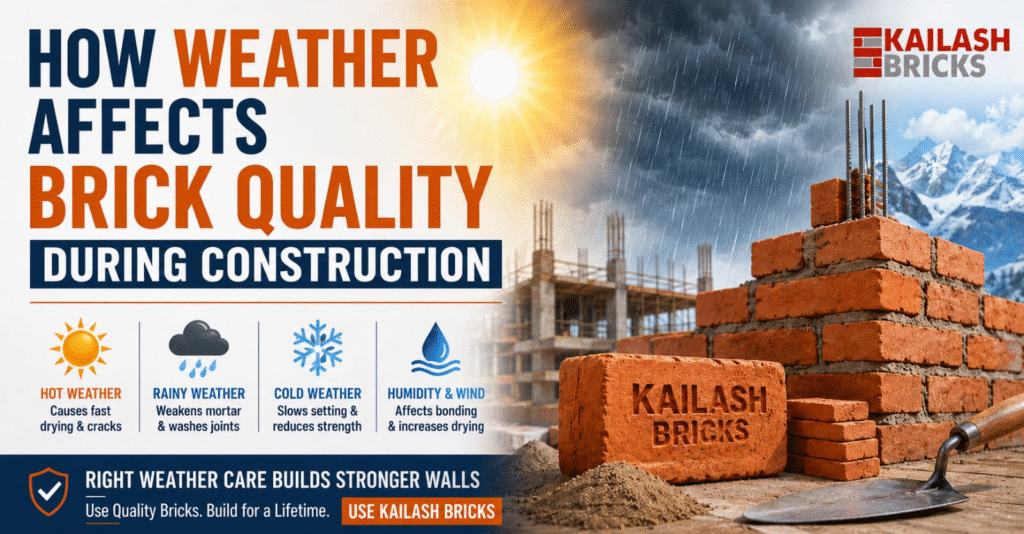
How Weather Affects Brick Quality During Construction

Weather plays a very important role in construction, especially when working with bricks. Many people focus mainly on materials like cement, sand, and bricks, but weather conditions such as temperature, rainfall, humidity, and wind can greatly affect the quality and strength of brickwork. If brick construction is done without considering the weather, it can lead to weak walls, cracks, poor bonding, and long-term structural issues.  That is why builders and engineers always keep an eye on weather conditions before and during construction work. Using high-quality materials such as Kailash Bricks also helps maintain strong and durable construction even in challenging weather conditions. In this article, we will understand how different weather conditions affect brick quality and what precautions builders should take during construction. Why Weather Matters in Brick Construction : Brick construction involves materials such as bricks, cement mortar, and water. These materials interact with each other through a chemical process known as hydration.  This process allows cement mortar to gain strength and bind bricks together. Weather conditions directly influence this process. For example: Because of these factors, weather conditions directly affect the strength, durability, and stability of brick walls. Using strong and reliable materials like Kailash Bricks helps reduce some risks, but weather precautions are still necessary. Effect of Hot Weather on Brick Construction : Hot weather is one of the biggest challenges during brick construction. When temperatures rise significantly, several issues can occur. 1. Fast Drying of Mortar In very hot conditions, water in the cement mortar evaporates quickly. This prevents proper hydration of cement, which means the mortar does not gain its full strength. As a result, the bond between bricks becomes weaker. 2. Cracks in Brick Walls Rapid drying can cause shrinkage in the mortar joints. Over time, this shrinkage may lead to cracks in the brick walls. These cracks can weaken the structure and reduce its durability. 3. Reduced Bond Strength When the mortar dries too fast, it cannot properly adhere to the bricks. This weak bonding can affect the stability of the entire wall. High-quality bricks, such as Kailash Bricks, can improve bond strength, but proper construction practices are still necessary. Prevention in Hot Weather Builders usually take the following precautions during hot weather: These steps help maintain the strength and durability of brick construction. Effect of Rainy Weather on Brick Construction Rain can also create serious problems during brick construction. Although water is required for cement hydration, excessive rainwater can disrupt the construction process. 1. Weak Mortar Mix Heavy rain can dilute the cement mortar mixture. When this happens, the mortar loses its strength and bonding capacity, leading to weak brick joints. 2. Mortar Washing Away If rain falls immediately after brick laying, it may wash away the cement paste from the mortar joints. This reduces the durability and strength of the wall. 3. Uneven Brick Alignment Rain creates slippery conditions, which makes it difficult for workers to place bricks accurately. This may lead to uneven brick alignment and poor wall structure. Even when using quality materials such as Kailash Bricks, protection from rain is necessary for proper construction. Prevention in Rainy Weather Builders usually follow these safety measures: These precautions help maintain the quality of brick construction. Effect of Cold Weather on Brick Construction Cold weather also affects brick construction, especially in regions where temperatures drop significantly. Low temperatures slow down the chemical reactions in cement mortar, which can delay the construction process. 1. Slow Setting of Mortar In cold conditions, mortar takes longer to set and gain strength. This slows down construction progress. 2. Freezing of Water in Mortar If temperatures drop below the freezing point, water inside the mortar may freeze. Frozen water expands and can damage the bond between bricks, leading to cracks and weak joints. 3. Reduced Work Efficiency Cold weather also makes it difficult for construction workers to maintain normal work speed and efficiency. Strong bricks like Kailash Bricks help maintain structural strength, but additional precautions are still required in cold climates. Prevention in Cold Weather Builders use several methods to handle cold weather conditions: These methods help maintain proper bonding between bricks. Effect of Humidity on Brick Quality Humidity refers to the amount of moisture present in the air. Both high humidity and low humidity can affect brick construction. High Humidity High humidity slows down the drying process of mortar. While this may reduce cracking, it can also delay construction progress. Low Humidity Low humidity increases evaporation from mortar, which can weaken bonding between bricks. To reduce these effects, builders often use proper curing techniques and quality materials like Kailash Bricks. Effect of Wind on Brick Construction Wind is another environmental factor that can influence brick quality. Strong winds increase the evaporation rate of water from mortar. This can cause: To prevent this issue, workers may install temporary wind barriers or cover fresh brickwork during construction. Importance of Proper Curing Regardless of weather conditions, curing is essential for strong brick construction. Curing means keeping brick walls moist for several days so that the cement mortar gains full strength. Usually, brick walls should be cured for 7 to 10 days after construction. When high-quality bricks such as Kailash Brick are used along with proper curing, the result is stronger and longer-lasting brickwork. Best Weather Conditions for Brick Construction The ideal weather conditions for brick construction include: These conditions allow mortar to set properly and create strong brick bonds. Weather conditions have a significant impact on brick construction quality. Factors such as heat, rain, cold, humidity, and wind can affect mortar strength, brick bonding, and the overall durability of a structure. By understanding how weather affects construction and taking proper precautions, builders can ensure strong, long-lasting brick walls. Using reliable and durable bricks, such as Kailash Bricks, also helps improve construction quality. In simple terms, successful brick construction depends not only on good materials and skilled labour but also on working with the right weather conditions and proper planning.

How Weather Affects Brick Quality During Construction Read More »