
Advantages of Machine-Made Bricks Over Traditional Ones
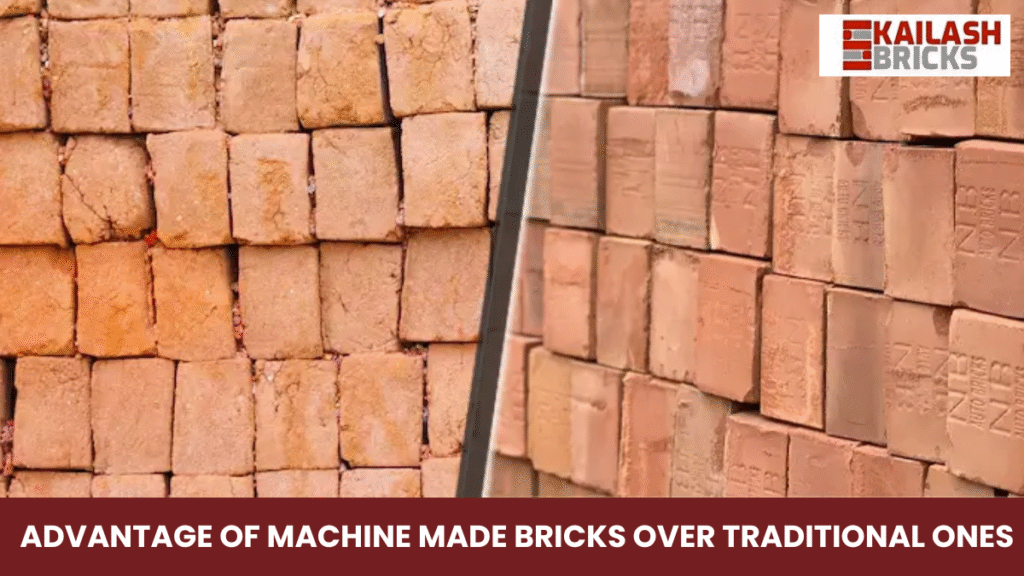
The construction industry has witnessed remarkable technological advancements in recent years, and one of the most notable transformations is the shift from traditional hand-molded bricks to machine-made bricks. While handmade bricks have long been a part of our architectural heritage, modern demands for precision, strength, and sustainability have encouraged builders to look for better alternatives. Machine-made bricks, like those produced by Kailash Bricks, represent the future of efficient and eco-friendly construction. Below, we explore the key advantages of machine-made bricks over traditional ones and how they are reshaping modern construction practices. 1. Superior Strength and Durability One of the most significant advantages of machine-made bricks is their exceptional strength. Traditional bricks are often made by manual molding and sun-drying, which leads to irregularities in shape and density. This inconsistency can weaken the structural integrity of buildings over time. Machine-made bricks, on the other hand, are manufactured using advanced hydraulic or mechanical presses that ensure uniform compaction and density. The result is a brick that can withstand greater loads and resist cracking or chipping. Builders using Kailash Bricks often highlight their long-lasting durability, which ensures that structures remain strong and stable for decades. 2. Uniform Size and Shape Precision is essential in modern construction, especially when it comes to alignment, plastering, and finishing. Traditional handmade bricks tend to vary in size and shape due to manual production methods, leading to uneven walls and increased mortar consumption. Machine-made bricks solve this problem through automated molding and pressing processes that maintain consistent dimensions for every brick produced. This uniformity not only enhances the aesthetic appeal of buildings but also significantly reduces plastering costs and construction time. Contractors who use Kailash Bricks machine-made products often experience smoother workflows and better finishing quality. 3. Enhanced Aesthetic Appeal Machine-made bricks offer a cleaner, smoother finish and a more appealing appearance compared to traditional handmade bricks. The surface texture can be customized to suit different architectural needs—whether you prefer a rustic look or a sleek, modern façade. Moreover, because these bricks are precisely shaped, they fit together neatly, producing walls that are visually consistent and professional-looking. Many modern developers choose Kailash Bricks because of their commitment to producing aesthetically refined and high-quality bricks that elevate the look of any construction project. 4. Greater Production Efficiency In today’s fast-paced construction environment, time efficiency is crucial. Traditional brickmaking is a labor-intensive and time-consuming process that relies heavily on manual labor and weather conditions. Sun-drying, for example, can take days, and production often slows down during the rainy season. Machine-made brick production is far more efficient and less dependent on environmental factors. Automated systems allow for continuous, large-scale production, ensuring a steady supply of uniform bricks throughout the year. Kailash Bricks utilizes advanced machinery and technology to meet large construction demands without compromising quality, helping developers meet deadlines with ease. 5. Environmentally Friendly Manufacturing Sustainability has become a core focus in modern construction, and machine-made bricks contribute significantly to eco-friendly building practices. Traditional brick kilns often burn coal or wood, releasing large amounts of carbon emissions and depleting natural resources. In contrast, many machine-made brick manufacturers, including Kailash Bricks, adopt energy-efficient production techniques that reduce pollution and minimize waste. These bricks can be made using fly ash or other industrial by-products, transforming waste materials into durable building components. As a result, they help lower the carbon footprint of construction projects and support sustainable development goals. 6. Reduced Water Absorption Water absorption is a key factor that determines the longevity and maintenance requirements of a building. Traditional bricks, because of their porous nature, tend to absorb more water, leading to issues such as dampness, efflorescence, and plaster peeling over time. Machine-made bricks are denser and less porous, meaning they absorb less water and provide better resistance to moisture-related problems. Builders who use Kailash Bricks machine-made products appreciate their ability to maintain structural integrity even in humid or rainy environments, reducing long-term maintenance costs. 7. Cost-Effectiveness Over Time While machine-made bricks might seem slightly more expensive initially compared to traditional handmade bricks, they offer substantial cost savings in the long run. The uniform size and shape reduce the amount of mortar required, and their smooth surface minimizes plastering needs. Furthermore, the durability of these bricks reduces repair and replacement costs over time. When you factor in faster construction and reduced wastage, Kailash Bricks machine-made options prove to be highly economical and value-driven for both residential and commercial projects. 8. Fire and Weather Resistance Machine-made bricks undergo a controlled firing process that ensures consistent hardness and strength. As a result, they offer superior fire resistance compared to traditional sun-dried or unevenly fired bricks. Additionally, these bricks can withstand extreme weather conditions—be it heavy rains, heat, or frost—without losing their structural properties. Many engineers and architects recommend Kailash Bricks because of their proven ability to perform well in diverse climatic conditions, ensuring safety and longevity for every structure. 9. Lower Rejection Rate and Quality Assurance Quality control is another area where machine-made bricks excel. The automated process ensures each brick meets strict dimensional and strength standards. In traditional methods, human error can cause inconsistencies, resulting in a high rejection rate. Manufacturers like Kailash Bricks conduct rigorous quality checks at every stage—from raw material selection to the final product—to maintain superior standards. This reliability ensures that builders get the exact quality they expect, batch after batch. 10. Meeting Modern Construction Standards As construction technology evolves, builders are expected to adhere to higher standards of precision, safety, and sustainability. Machine-made bricks are engineered to meet modern building codes and performance requirements. They offer greater load-bearing capacity, consistent texture, and energy efficiency—all qualities that align with contemporary construction needs. Kailash Bricks, as a leading name in the industry, continues to innovate and produce machine-made bricks that meet the demands of modern infrastructure while preserving the timeless strength of brick masonry. Conclusion The shift from traditional handmade bricks to machine-made bricks marks a major milestone in the construction industry. With their superior strength, uniformity, durability, and sustainability,
Advantages of Machine-Made Bricks Over Traditional Ones Read More »